
Blog
2 Stroke vs 4 Stroke Enduro: Which Bike Should You Ride?
Light and snappy, or smooth and predictable? Here is how a 2-stroke and a 4-stroke enduro bike really differ on the trail, and how to pick yours.
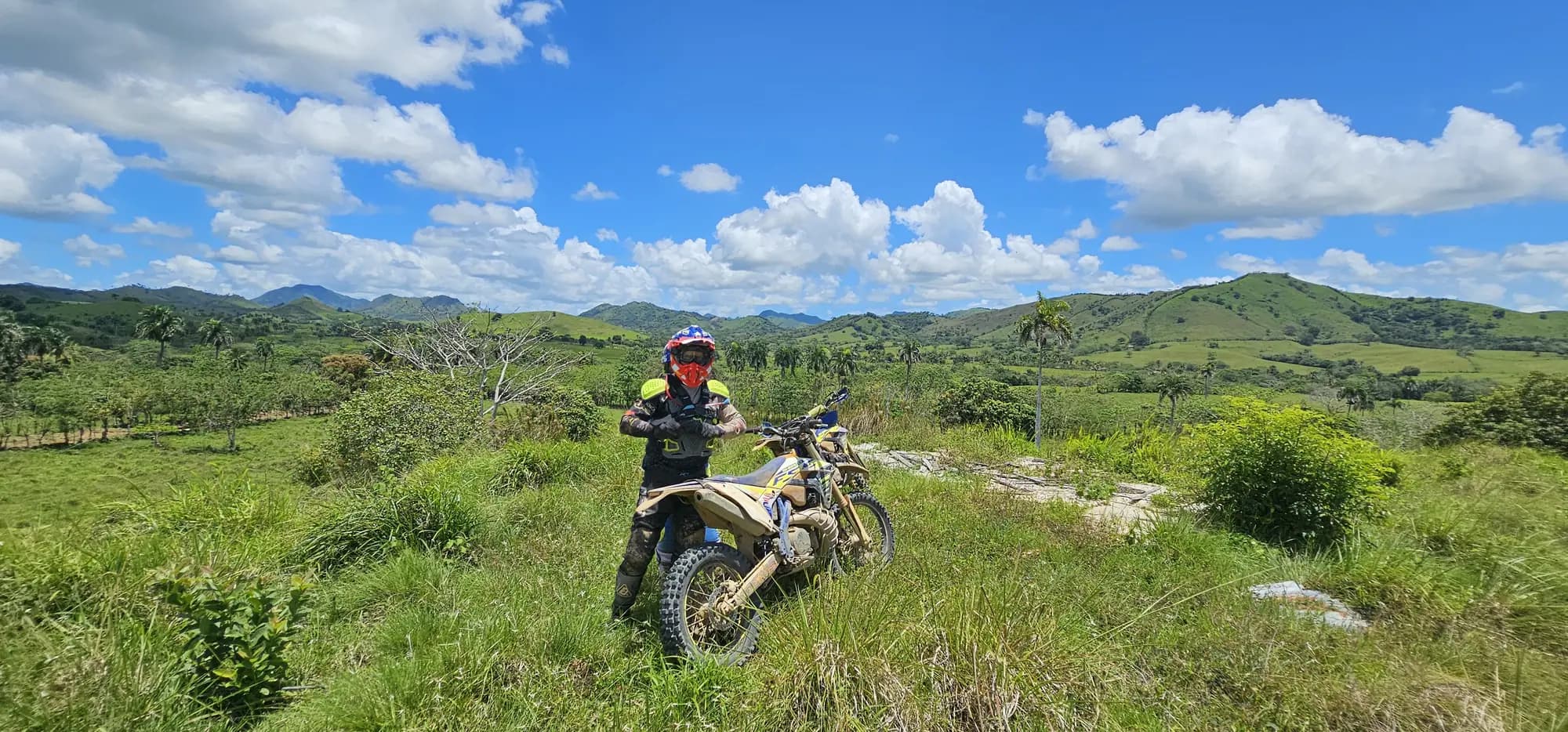
Honestly, you probably didn't plan to read a blog about engines today. But if you are about to buy an enduro bike, or you are booking a guided ride and the question is which bike to pick, the 2-stroke vs 4-stroke debate is the one that matters.
Here is the short version. A 2-stroke enduro bike is light, simple and snappy. A 4-stroke is smooth, steady and easier to live with. The long version is below: a side by side table, what each engine is best at, and what it means once you are on a real trail.
2 stroke vs 4 stroke enduro: the quick answer
A 2-stroke enduro bike is lighter and punchier, so it wins on tight, technical terrain. A 4-stroke is smoother and more predictable, so it wins on long days and for riders who are still building their skills. Neither one is better overall. The right one depends on your skill level, the terrain and how much maintenance you want to deal with.
2-stroke vs 4-stroke enduro bikes side by side
These are general patterns. The exact numbers change with the model, the tune and the rider.
| What matters | 2-stroke (for example a 300cc) | 4-stroke (for example a 250cc) |
|---|---|---|
| Power delivery | Strong and sudden low in the revs, snappy on top | Smooth and linear, builds gradually |
| Weight and feel | Lighter, easy to flick and to pick up | A few kilos heavier, more planted |
| Traction | Needs more clutch and throttle control | Usually easier to find grip on loose or slippery ground |
| Engine braking | Very little | More, which helps on steep descents |
| Fatigue on a long day | Higher, you work the clutch more | Lower, the bike does more of the work |
| Maintenance | Simpler engine, top end refreshed more often | More parts, valve clearance checks, more oil changes |
| Fuel and oil | Premix or oil injection depending on the model | Fuel in the tank, oil in the engine |
| Best for | Technical trails, hard enduro, experienced riders | Beginners, long days, fast and mixed terrain |
How a 2-stroke and a 4-stroke really differ
You do not need the engineering diagrams. Here is what it means once you are on the trail.
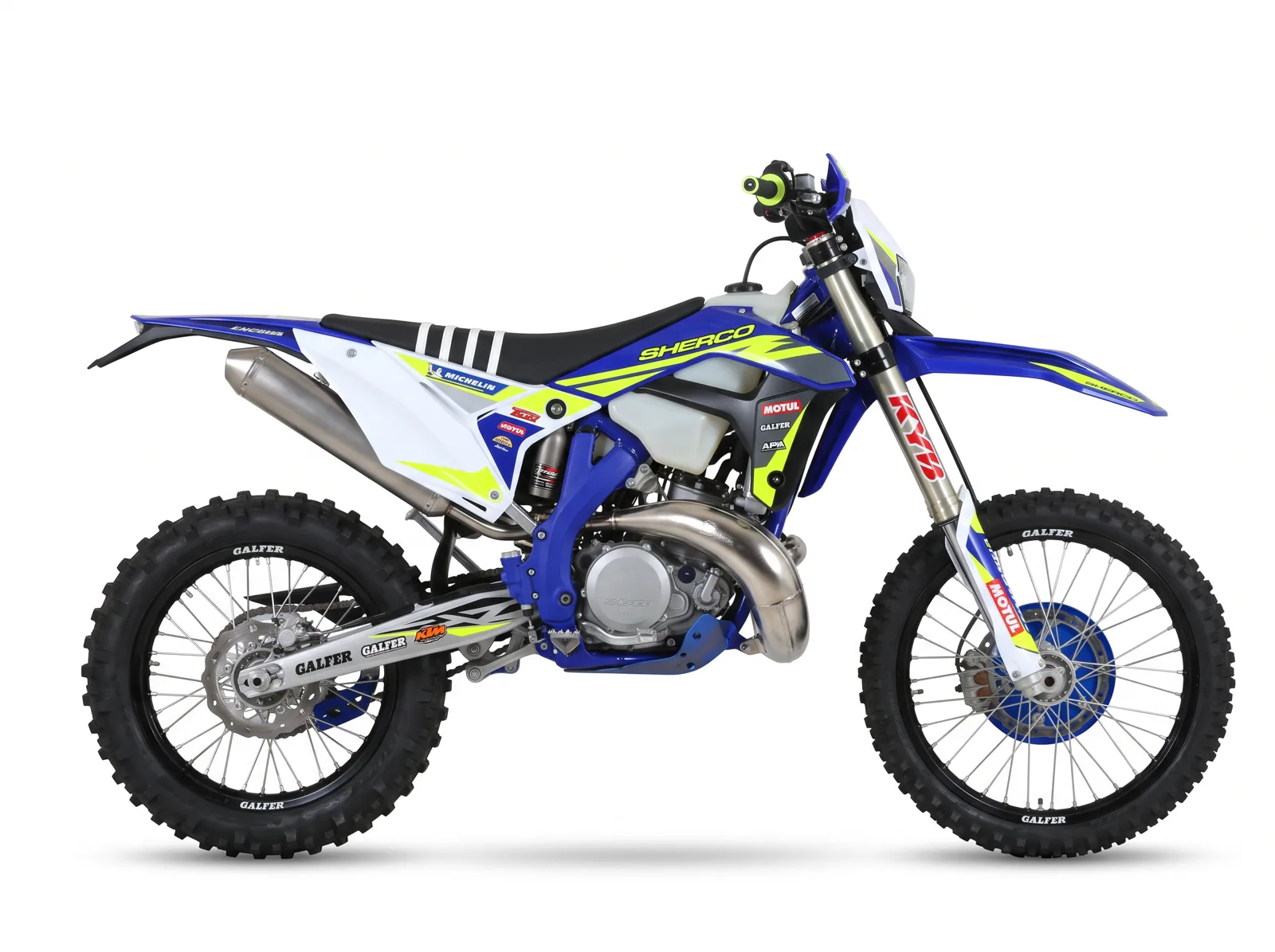
A 2-stroke engine fires once on every turn of the crankshaft. A 4-stroke fires once every two turns. More firing means more punch for the same engine size, and it lets a 2-stroke get away with fewer moving parts: no valves, no camshafts, no oil sump. A 4-stroke needs all of that, which makes it heavier, but it also makes the power smoother and easier to control.
The 2-stroke enduro bike: light, simple, a bit wild
What riders love about it:
- Weight. It is usually a few kilos lighter, and you feel it every time you flick the bike through a tight section, or pick it up after a fall.
- Instant response. Power shows up fast and low in the revs, so a short blip of throttle gets the front wheel up and over a log or a ledge.
- A simple engine. Fewer parts means fewer things to break and cheaper rebuilds.
- Little engine braking. The bike rolls freely, which helps in slow technical sections.
What to watch out for:
- It asks for more clutch and throttle control, especially on slippery climbs where too much power just spins the wheel.
- It is more tiring over a long day because you work the clutch more.
- The top end (piston and rings) needs refreshing more often than on a 4-stroke.
- Some models still need premix or oil injection, so check your bike before you fill up.
Look at the top of hard enduro and you will mostly see 250 and 300cc 2-strokes. When the terrain is steep, rocky and awkward, a light bike that answers the throttle instantly beats everything else.
The 4-stroke enduro bike: smooth, steady, forgiving
What riders love about it:
- Predictable power. You can roll on the throttle without the bike jumping, which leaves more room for mistakes.
- Traction. The rear wheel tends to hook up instead of spinning, so loose climbs are easier to read.
- Less tiring. Over five or six hours in the saddle, you finish fresher.
- Engine braking. It holds the bike back on steep descents.
What to watch out for:
- It is a few kilos heavier, so it is harder to throw around in the tightest spots.
- There is more to look after: valve clearances, oil and filters, more moving parts.
- A rebuild costs more when something does go wrong.
In one Sherco test by Enduro21, the rider found the 2-stroke lighter in the technical sections and the 4-stroke gripping more and feeling more stable on the straights. That matches what we see on the trail every week.
Which is better for beginners?
For most beginners, a 4-stroke. Smooth power gives you a bigger margin for mistakes: you can open the throttle without the bike leaping forward, and the rear wheel is less likely to spin out of control on a loose climb.
That said, weight matters too. A 2-stroke is easier to pick up and to manage in tight spots, and plenty of riders learn on one. What counts most is how the power arrives and how comfortable you are with the clutch.
If you are still building the basics, start with our driving level guide and the post on enduro vs dirt bike. Our tours are built for intermediate to expert riders, so we want you comfortable on the bike before you arrive.
Which one suits your terrain?
- Tight, rocky single track: 2-stroke. Light and quick wins.
- Steep, slippery climbs: it depends. A 2-stroke is lighter, a 4-stroke finds grip more easily. The rider matters more than the engine.
- Fast dirt roads and long transfers: 4-stroke. Stable, relaxed and less tiring.
- Mud and ruts: 2-stroke if you are confident, 4-stroke if you want more grip and less drama.
- Sand and beach: either works. Smooth, steady power makes sand easier, so plenty of riders reach for the 4-stroke here.
- Long multi-day rides: 4-stroke. It saves energy on day three and day four.
Maintenance and running costs, honestly
There is no cheap winner here. A 2-stroke has a simpler engine and cheaper parts, but you refresh the piston and rings more often. A 4-stroke goes longer between rebuilds, but it has valves to check, more oil to change and a bigger bill when something does break.
Intervals depend on the model and how hard you ride, so follow the manual for your bike. On a guided tour none of this is your problem: the bikes are serviced, there is a mechanic on every tour and fuel is included.
Three myths about 2-strokes and 4-strokes
Myth: a 2-stroke is always faster
It feels more explosive, but on fast, open sections a 4-stroke can hold the same speed with less effort.
Myth: 4-strokes are only for beginners
Plenty of experienced riders choose them for long days and flowing trail. Smooth power saves your arms and your legs, and that matters at any level.
Myth: 2-strokes are outdated
They never left. Many modern 2-strokes are fuel injected, and they still dominate the technical end of the sport.
2-stroke or 4-stroke in the Dominican Republic?
Picture a steep red-dirt climb after rain, a river crossing, a stretch of jungle single track, then coconut fields and a long beach, all in tropical heat. That is our normal day, and it is exactly the kind of mixed riding where this question comes up.
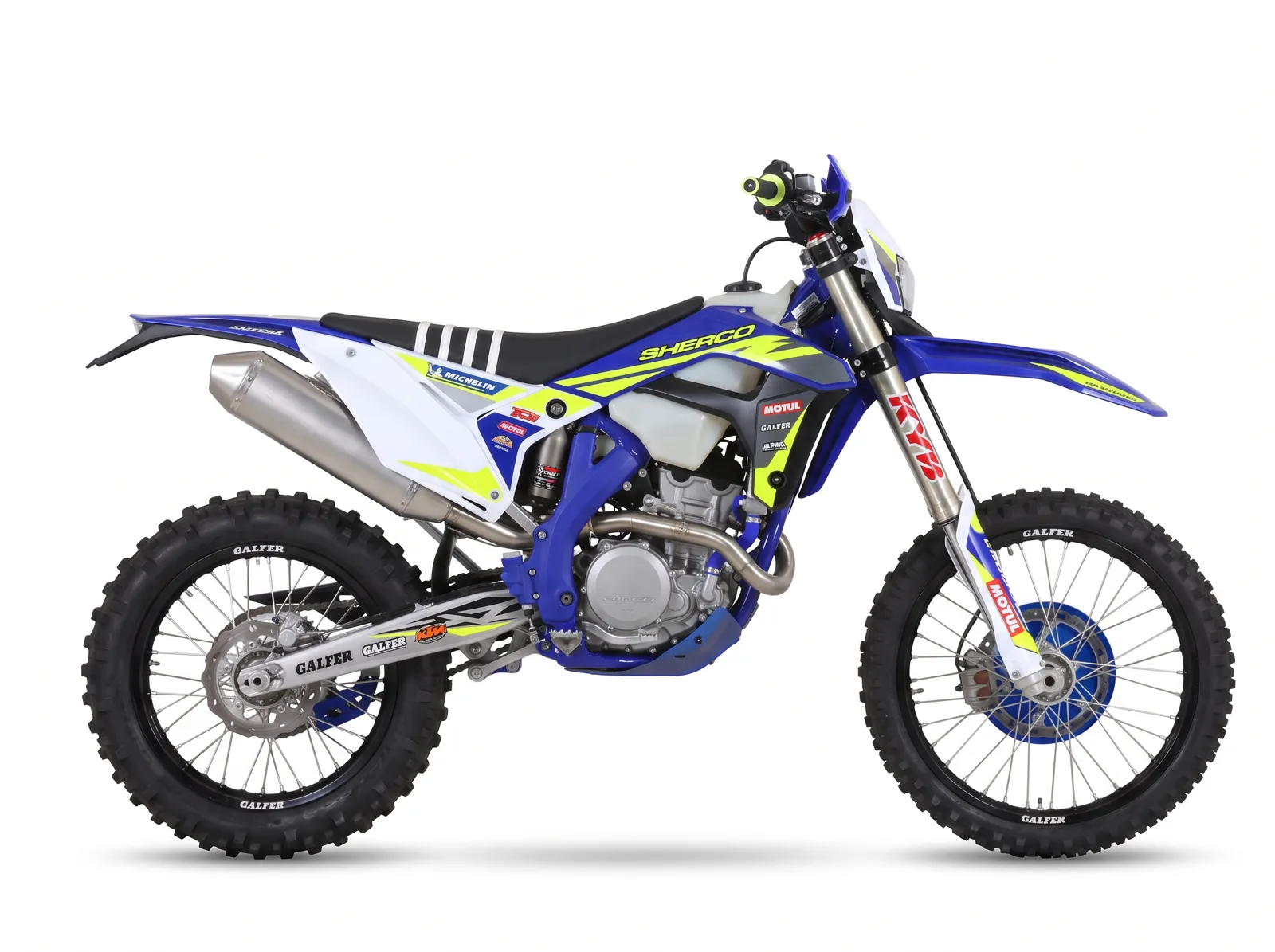
We ride both bikes every week, so we have opinions. Our fleet has the Sherco 300 SE Factory 2-stroke and the Sherco 250 SEF Factory 4-stroke. Our rule of thumb:
- On a technical day around Las Terrenas, we usually suggest the 300 2-stroke to confident riders.
- On the long crossing days of the 4-day tour, the 250 4-stroke keeps you fresher.
You choose your bike when you book. Read our Sherco 300 review or see the full Sherco fleet.
How to choose in five questions
- How long have you been riding off-road? Less than a year or two, lean 4-stroke.
- What will you ride most? Tight and technical, lean 2-stroke. Open and flowing, lean 4-stroke.
- How long are your days? Three hours is easy on any bike. Five or six hours is where a 4-stroke saves you.
- How do you feel about wrenching? Simple and cheap parts, 2-stroke. Longer intervals between rebuilds, 4-stroke.
- What is the hardest thing you want to ride? If it is steep, rocky and awkward, the 2-stroke gives you the edge.
Final verdict: 2-stroke or 4-stroke enduro?
Pick the 2-stroke if
- You ride technical, rocky or steep terrain
- You already have good clutch and throttle control
- You want the lightest bike you can get
Pick the 4-stroke if
Still undecided? Ride both.
- You are newer to enduro or still building skills
- Your days are long and your trails are fast and mixed
- You want smooth, predictable power and more traction
Try both on a guided ride in the Dominican Republic
Private groups, full support, real off-road riding, and your choice of Sherco 2-stroke or 4-stroke. Pick your route:
- 2-Day Las Terrenas: $599 per rider
- 3-Day Samaná: $999 per rider
- 4-Day Cross-Country: Punta Cana to Las Terrenas, $2,499 per rider
Prices are per rider for a group of 4. Book now, or read about dirt bike tours in the Dominican Republic.
Frequently asked questions
Is a 2-stroke or a 4-stroke better for enduro?
Neither is better overall. A 2-stroke is lighter and punchier, which suits tight, technical terrain and experienced riders. A 4-stroke is smoother and more predictable, which suits beginners, long days and fast, mixed trail.
Which is better for a beginner, a 2-stroke or a 4-stroke enduro bike?
For most beginners a 4-stroke is the easier choice, because the power comes in gradually and the bike is more forgiving of mistakes. A 2-stroke can still work well for riders who are comfortable with the clutch.
Why do hard enduro riders choose 2-strokes?
Light weight and instant low-rev power matter most on steep, rocky and awkward terrain. That is why most of the top hard enduro riders choose 250 and 300cc 2-strokes.
Is a 250 4-stroke the same as a 300 2-stroke?
No. A 300cc 2-stroke usually feels lighter and punchier, while a 250cc 4-stroke feels smoother and more planted. They are close in performance, but they ride differently.
Are 2-stroke enduro bikes harder to ride?
They ask for more clutch and throttle control, especially on slippery climbs, so they are less forgiving for newer riders. With some experience many riders prefer them for the lighter feel.
Do 2-stroke enduro bikes still need premix?
It depends on the model. Some modern 2-strokes use oil injection, while others still need premix. Always check your bike before you fill up.
Which enduro bike is less tiring over a long day?
A 4-stroke usually leaves you fresher, because you work the clutch less and the power is steadier. That is why we often suggest it for the long days of a multi-day tour.
Can I try a 2-stroke and a 4-stroke before buying?
Yes. On our guided tours in the Dominican Republic you can ride a Sherco 300 2-stroke or a Sherco 250 4-stroke, and you choose your bike when you book.